Arjen Arî’s storytelling: The memory of lived experience transformed into literature
28.12.2025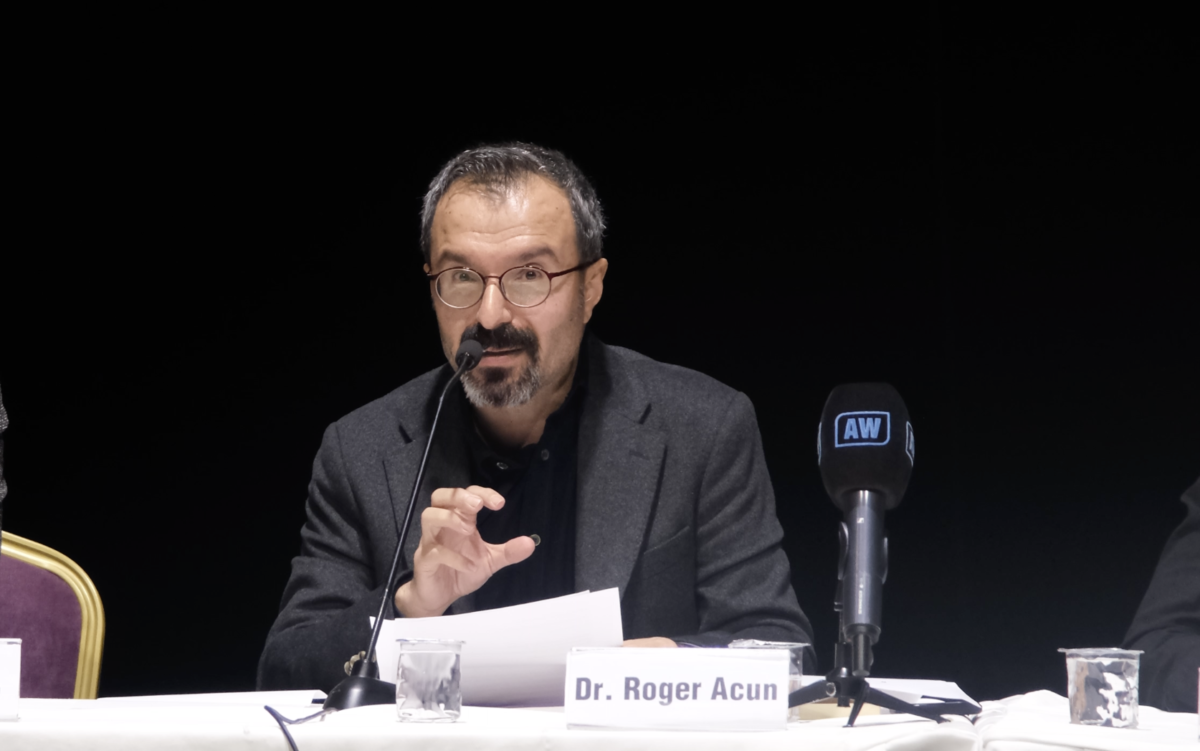
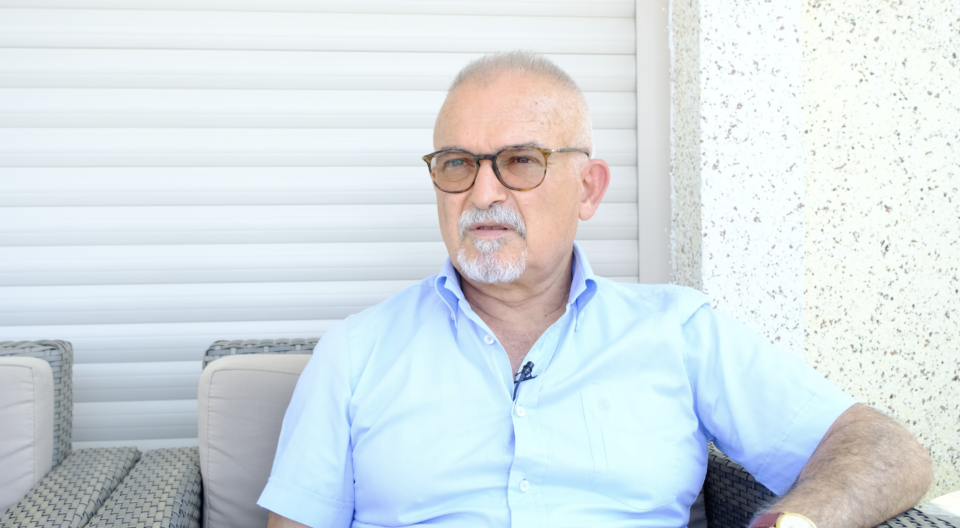
Dr. Roger Acun, known for his in-depth research on literature and modern Kurdish poetry, discussed the historical evolution of the concept of “image” in poetry and the unique poetic methodology of Arjen Arî, one of the pioneers of modern Kurdish literature, during the program he participated in. In his presentation titled “Imagery and Poetics in Arjen Arî’s Poetry,” Dr. Roger Acun conveyed to the audience a deep analysis of the poet’s lexical world, his imagery, and the methodology he introduced to Kurdish poetry.
At the beginning of his presentation, Dr. Roger Acun shared a memory recounted to him by Ömer Dilsöz, noting that no one had come to the signing event organized by the Regional Journalists’ Association in 2004 or 2005 for Arjen Arî and Ömer Dilsöz. Acun relayed Dilsöz’s response to the question, “Arjen, I’m new, I’m just starting to write, no one knows me. But you’re Arjen Arî; you have a name, you have poetry, you have a poetic voice. Why didn’t anyone come?” Acun recalled the late poet’s response that day: “Ömer Ağabey, they’ll come. One day they’ll come, but I won’t be here to see it,” and added, “Blessed are those who see it.”
“An image that has been adopted into different languages has a presence in the mind”
In his speech, Acun first focused on the etymology and philosophical definition of the concept of “image.” Noting that this concept has been adopted from English into other languages, he said, “Speakers of Sorani call it ‘hîma,’ meaning ‘sign’ or ‘indicator.’ “Others call it ‘nîgaş,’ meaning embroidery and depiction, and I believe this derives from the Arabic word ‘nigâr,’” he said. Noting that the Turkish word ‘imge’ is also derived from “imaj,” Acun described the concept as a mental, emotional, and perceptual form.
Referring to Aristotle’s Poetics, Acun said, “Aristotle states in his Poetics: ‘When we ascribe a meaning other than its literal one to an object or a word, that thing becomes an image.’ Arabs call this ‘mecaz,’ or we also use the word ‘metaphor’ for this situation. In the Sabian language, they call it a ‘symbol.’ Remiz, rumuz, symbol… All of these, every single one, are images,” he said.
Acun, conveying philosophers’ views on the image, recalled Gaston Bachelard’s statement, “Images have an existence,” and remarked, “An image formed in the mind, no matter how abstract, still possesses an existence within the mind. It is true; you cannot touch it, feel it, or see it, but it has an existence in the mind.”
“An image is worth more than volumes of books”
Acun, drawing striking examples from world literature, drew a parallel between Ezra Pound and İsmet Özel and made the following remarks:
“Ezra Pound is known as a fascist poet and was a supporter of fascism; yet he is a valuable poet. I compare him to İsmet Özel among Turks. İsmet Özel has truly sublime, elevated poetry; but what good is that? İsmet Özel is a fascist—that won’t change. I see Ezra Pound the same way. He is a fascist, yet he wrote good poetry, and Ezra Pound is, in fact, the founder of Imagist poetry.”
Quoting Pound’s statement, “There is no need to fill volumes of books with something that can be expressed through a single image,” Acun said, “So there is a book, and you’ve filled volume after volume; yet sometimes constructing a unique image is better than writing a book. This highlights the importance of the image.” Referring to Shakespeare’s “dawn writhing in a crimson cloak” and Homer’s “dawn with rose-tipped fingers”—an image used 27 times in the Iliad and Odyssey—Acun noted that while the transition from darkness to light can be described on pages, it is transformed into a unique image with just a few words.
Recalling Terry Eagleton’s approach that “figurative language breaks away from everyday speech,” Dr. Acun explained that in classical Divan poetry, the term “mazmun” or “metaphor” is used instead of “image.”
Acun, who argues that this should not be viewed as an anachronism, says, “Metaphors, extended metaphors, euphemisms, irony, puns, and dozens of other literary devices were used to create metaphors or imagery. For example, they called a rose a ‘rose,’ but the deeper meaning behind it was the beloved’s face. When they said ‘cypress,’ they meant the beloved’s stature; when they said ‘night,’ they meant the beloved’s hair; and when they said ‘violin,’ they meant the beloved’s eyebrow. Literary devices are the creators of imagery,” he said.
“We may need a dictionary for Arjen Arî’s poetry in the future”
Dr. Roger Acun, who has made striking observations about Arjen Arî’s poetics, noted that Arî—one of the pioneers of modern Kurdish poetry—draws his imagery from folkloric expressions. Emphasizing that Arjen Arî uses these words—which most people are forced to avoid—with wisdom, Acun issued the following warning:
“In fact, as I work on this project, I see that people don’t understand many of Arjen Arî’s words. In other words, if you have no interest in poetry, aren’t a connoisseur of poetry, or your Kurdish isn’t very, very good, some of Arjen Arî’s poems and words are no longer comprehensible. We’ll probably have to include a glossary at the end of Arjen Arî’s books in about 10 or 20 years so that new generations can understand him properly.”
Acun, noting Arjen Arî’s statement from an interview—“I write poetry from chosen words”—pointed out that while this methodology shares similarities with that of Dadaism’s founder, Tristan Tzara, their paths diverge in their approach to the goal: “Of course, Arjen Arî’s poetry is not Dadaist poetry. His poetry is somewhat Parnassian, and like everything else, somewhat romantic. But I can say that Arjen Arî’s methodology is the same as Tristan Tzara’s—placing words side by side. In my view, the difference between them is that Tristan Tzara writes nonsensical poems with words from different contexts; meaning was not important to him. However, for Arjen Arî, the relationship between words, the music of words, and the chemistry of words are very important. When he brings these folkloric words together, he creates a logical structure and constructs a philosophical poem.”
“The Geographical and Historical Legacy”
Dr. Roger Acun noted that Arjen Arî’s poems are not merely rooted in folklore, but also in the “geography of the land”: “In other words, if you live in Kurdistan, the geography of Kurdistan is your guide. How so? Its mountains, its plains, its rivers, its forests… All of these are your companions. In Arjen Arî’s poetry, one encounters many such elements. For instance, from the beauty of the mountains to creatures like the eagle, the falcon, the vulture… All of these are reflected as images and motifs in Arjen Arî’s poetry.”
Acun noted that in the literary world of the poet, alongside geography, “historical narrative” also plays a significant role, and concluded his remarks by saying: His work is intertwined with mythological and historical themes; these also play a major role in his poetry. For example, Kawa, Mem and Zîn, Siyabend and Xecê… These are not just our mythology; they are our historical legacy. When Arjen Arî takes on a work, he doesn’t merely reproduce it; he modernizes it and brings it into the 21st century. For this reason, his work is a living one; it is always relevant and never becomes outdated. Now, if we take a closer look, we’ll see that national honor and dignity are also reflected in his poetry. Patriotism, the yearning for freedom, the Kurdish language itself… All of these have been brought to life under Arjen Arî’s pen and have taken on new hues. For this reason, when we read one of his poems, we do not merely read a poem; we encounter history, culture, geography, and philosophy all intertwined.”
This news article was prepared with financial support from the German Embassy in Ankara as part of the “Strengthening Local Media Organizations through International Mentoring and Digital Transformation” project; our organization is solely responsible for the content.