
Sirgûn “Rîşa Pûç”: The story of exile, pain, and resistance
15.10.2025
Arjen Arî, the pioneer poet of modern Kurdish literature, was commemorated on the 13th anniversary of his death
30.10.2025Salih Agir Qoserî: Kurdish literature in Europe was created through exile, not through diaspora

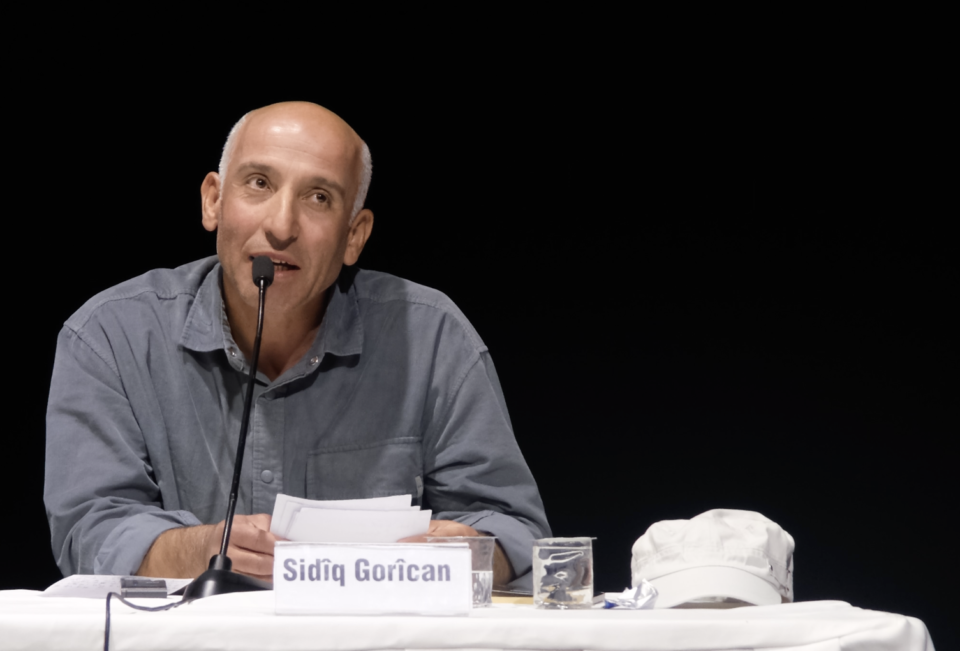
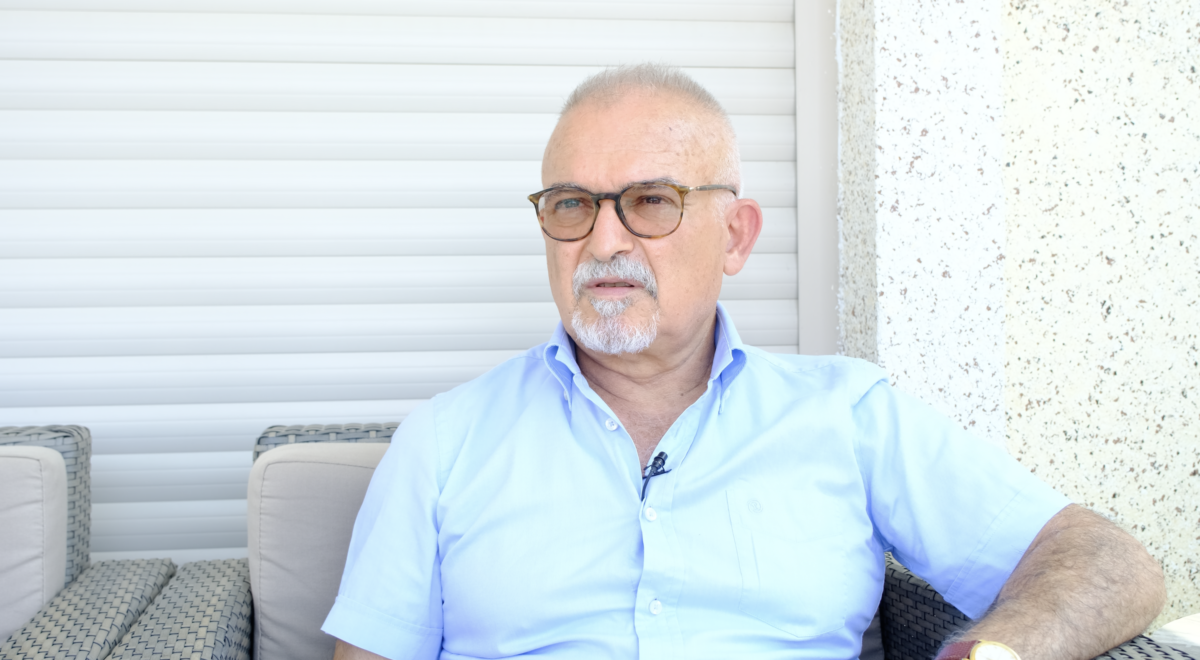
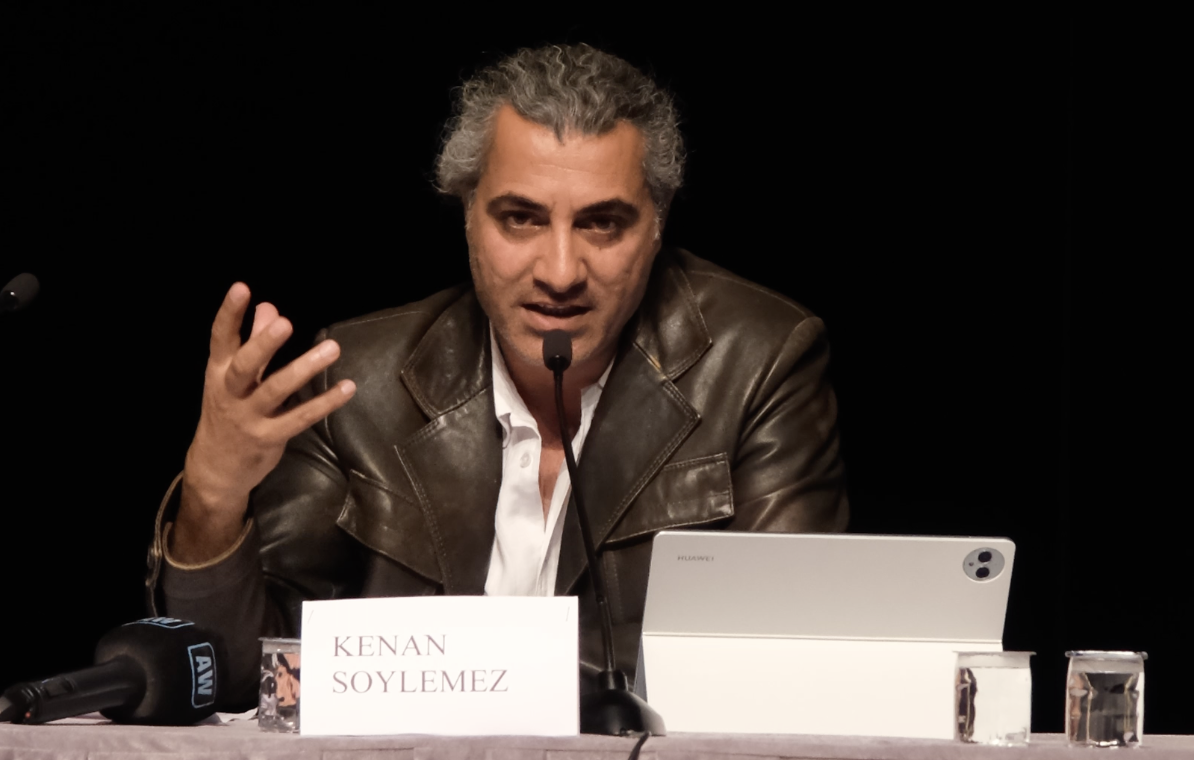
Mehmed Uzun, one of the pioneers of Kurdish literature, was commemorated at an event held at the Sezai Karakoç Culture and Congress Center (ÇandAmed) in Diyarbakır on the anniversary of his death. As part of the event, writer and researcher Salih Agir Qoserî gave a speech titled “Exile and Writing.”
In his speech, Qoserî touched upon the historical and literary reflections of the phenomenon of exile in Kurdish literature, emphasizing that Mehmed Uzun was one of the strongest representatives of this tradition.
“Kurdish literature was shaped in exile”
Salih Agir Qoserî stated that the roots of Kurdish literature developed largely outside the homeland, saying:
“Kurdish court literature began in Istanbul in the late 1800s and 1900s. Later, we had a literary tradition that developed in the Caucasus, Damascus, and finally Sweden. None of these works were created on Kurdish soil. Therefore, this process should be called ‘exile literature.’”
Qoserî emphasized the difference between exile and diaspora, stating that the foundations of Kurdish literature in Europe stemmed from the “experience of exile”:
“Exiles leave their homeland but do not forget it; they continue to write and tell stories about it. Diaspora, on the other hand, is the reality of generations growing up in a new culture. Therefore, Kurdish literature in Europe should be considered exile literature, not diaspora literature.”
From Edward Said to Mehmed Uzun: The consciousness of exile and writing
Referring to Edward Said’s views on the concept of exile in his speech, Qoserî stated that exile is not only a spatial distance but also creates a multi-layered way of thinking:
“Edward Said defines exile as a two-sided consciousness. The individual carries a dogmatic sense of belonging to their homeland while also having to learn the language and culture of their new country. This contradiction is one of the most powerful creative sources in literature.”
In this context, Qoserî stated that Mehmed Uzun’s works in Sweden could be considered “counter-exile literature,” saying that Uzun’s novels carry both the pain of Kurdistan and the memory of a nation:
“All of Mehmed Uzun’s works are examples of exile literature. Their content is Kurdish, it is Kurdistan. In his novels, there is not a nostalgic or romantic exile, but a traumatic memory.”
“Traumatic nostalgia may be a new concept in Kurdish literature”
Qoserî also spoke about “traumatic nostalgia,” a concept he developed in his doctoral thesis:
“Exiled writers do not merely look back on the past with longing; they also carry the oppression, torture, and trauma they have experienced. That is why I call these works ‘traumatic nostalgia.’ I believe this concept will find its place in Kurdish literature.”
“Exile literature is a form of resistance for the Kurdish identity”
At the end of his speech, Qoserî defined exile literature as a space for identity and resistance:
“Exile is not separation from one’s homeland; it is a way of keeping memory alive. Mehmed Uzun did just that. He wrote in exile, but his homeland was present in every line.”
Mehmed Uzun’s literary legacy reminds us once again that the experience of exile is not only a necessity but also a space for rebirth.