Forgotten village games recorded: Oral cultural testimony from İnler Village
17.12.2025
Traces of the image in Arjen Arî’s poetry
27.05.2026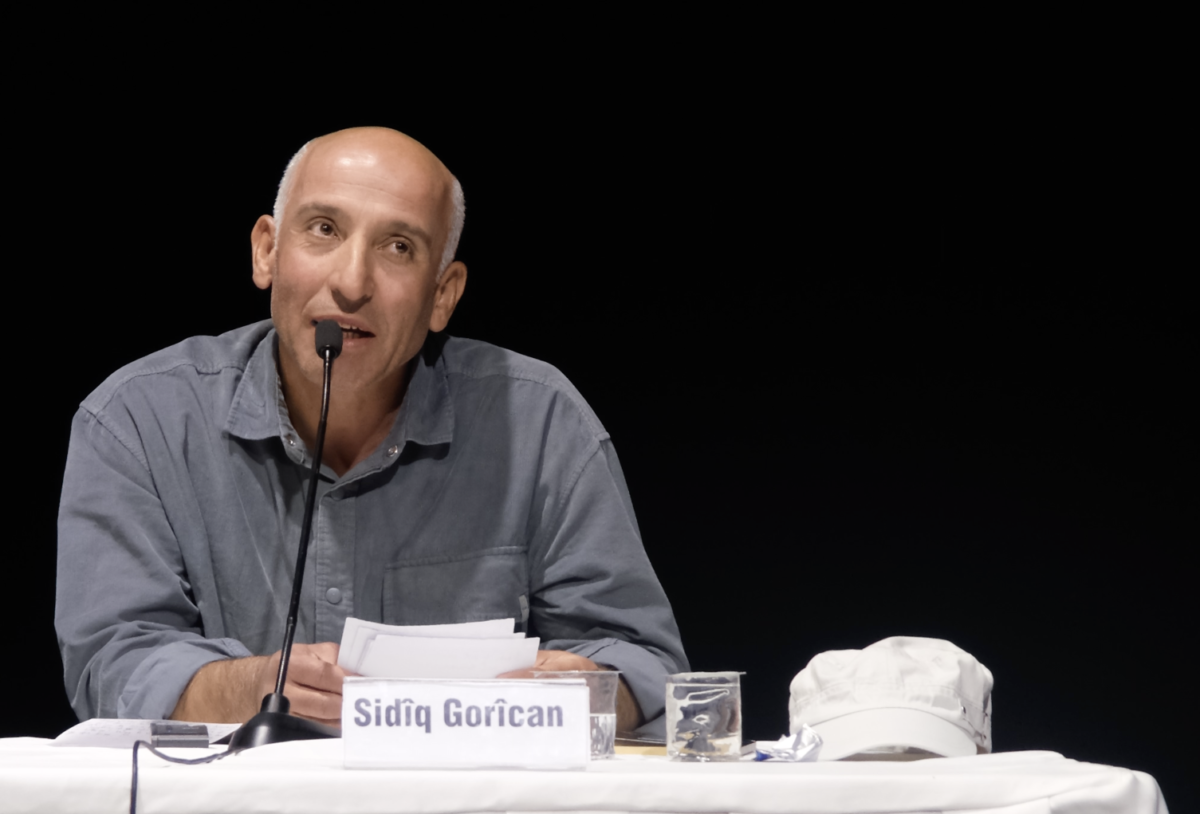
Poet Sidîq Gorîcan evaluates Arjen Arî’s storytelling through the lens of experience, memory, and everyday language. According to Gorîcan, Arjen Arî’s stories are not fictional; they are literary records of lived experiences filtered through village life, childhood, and oral culture.
Not stories, but life itself
Poet Arjen Arî occupies a special place in Kurdish literature with his storytelling. According to Sidîq Gorîcan’s assessment, although Arjen Arî’s texts can be defined as “stories” in the classical sense, these narratives are not imaginary; they are a reflection of lived experiences in literature.
Gorîcan attributes the fundamental reason for the powerful impact Arjen Arî’s writings have on readers to the sincerity and authenticity of the texts. “Everything he tells is his life,” says Gorîcan, emphasizing that this authenticity establishes a strong bond with the reader.
Everyday language, folklore, and memory
Everyday language stands out as a defining element in Arjen Arî’s stories. According to Gorîcan, this language does not harm literature; on the contrary, it reveals the naturalness and liveliness of the Kurdish language. Details such as village life, childhood games, black-and-white photographs, and first encounters with radio and electricity occupy an important place in Arjen Arî’s narratives.
Folkloric motifs, conversational language, idioms, and proverbs are used extensively in the texts. Gorîcan relates Arjen Arî’s narratives to the collective memory of the Kurdish people, saying, “If a language has idioms and proverbs, it has a philosophy.”
Narratives stretching from grandmother to story
Behind Arjen Arî’s storytelling lies a strong tradition of oral culture. At the center of this tradition is his grandmother, Finca Xelil. According to Gorîcan, Finca Xelil appears in Arjen Arî’s narrative world as the “fountain of stories.”
These narratives, in which every word flows like a song, create both sensory and emotional depth in Arjen Arî’s texts. In this way, the stories have the effect of transporting the reader from the present to the memory of the past.
Wit, humor, and authentic literature
Sidîq Gorîcan points out that humor and wit play an important role in Arjen Arî’s storytelling. The subtle humor and warm narration in the texts draw the reader into the text without tiring them. Gorîcan states that, in this respect, it is possible to consider Arjen Arî’s narratives alongside examples from world literature.
Writing from the heart, not to develop the Kurdish language
According to Gorîcan, Arjen Arî writes entirely from the heart, not with the claim of “developing” the Kurdish language. This approach produces authentic literature by distancing the language from artificiality. In contrast to the intense linguistic imagery seen in his poems, a more open and direct narrative is preferred in his stories.