Author Kenan Söylemez: The influence of dengbêjlik is very evident in Mehmed Uzun’s novels
23.11.2025
Forgotten village games recorded: Oral cultural testimony from İnler Village
17.12.2025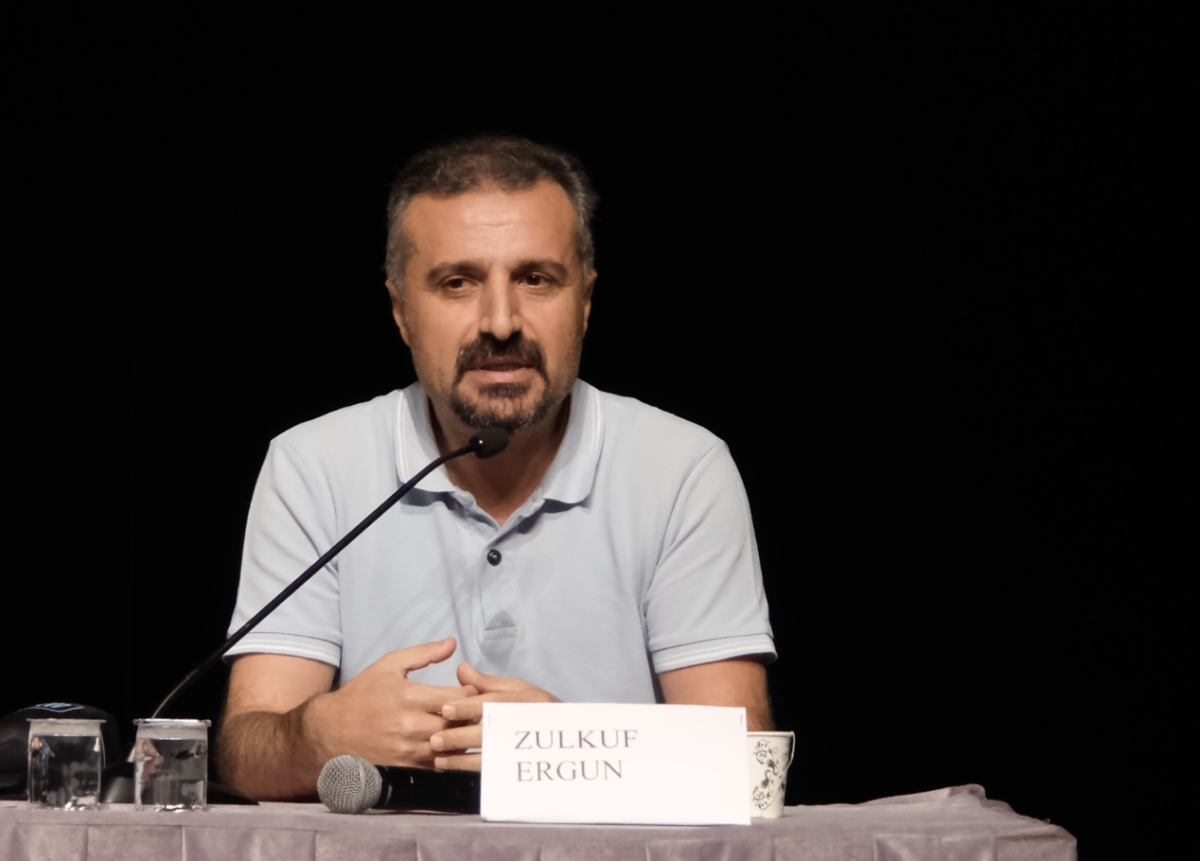
Mehmed Uzun, one of the pioneering novelists of Kurdish literature, is increasingly discussed and reread each year for the role he played in the construction of modern Kurdish literature. In his comprehensive presentation, Associate Professor Zülküf Ergün made important assessments of Uzun’s novelistic work through the lens of his “efforts toward a modern perspective.”
According to Ergün, Mehmed Uzun is a writer who deeply experienced the difficulty of producing modern literature in a banned and oppressed language. For this reason, he did not just write his works; he also researched the Kurdish literary tradition, collected its sources, and made a systematic effort to carry it into the future.
The turning point in modern Kurdish literature: Mehmed Uzun turning his attention to the West
In his presentation, Ergün emphasized that the rupture between 1923 and 1980 created a significant void in Kurdish literature, highlighting that Kurds living in the north during this period were deprived of the opportunity to create a modern literature. Mehmed Uzun’s decision to settle in Sweden and continue his writing is seen as part of an effort to repair this rupture.
According to Ergün, Uzun’s move abroad prompted him to ask a big question:
“Is there such a thing as modern Kurdish literature?”
This question led Uzun to conduct extensive research and systematically examine the roots of Kurdish literature before writing his novels.
Folklore and modernity: Uzun’s literary sources
Academician Ergün states that Mehmed Uzun regarded folklore not only as a cultural element but also as one of the fundamental sources of modernity. It is possible to see a similar reflection of the romantic movement in Germany’s return to folk literature in Mehmed Uzun.
The prominence of figures such as dengbêj, epic narrators, singers, and storytellers in Uzun’s novels is a result of this approach.
The Death of Old Rınd, Evdale Zeynike, and Dicle’s Lament stand out as novels where this connection is felt most strongly.
Aesthetics of language: Literary resistance against assimilation
In his presentation, Ergün particularly emphasized that Uzun’s greatest effort was to give Kurdish language aesthetic value and prestige. According to Uzun, when a people’s language gains value, that society’s belief in the future also strengthens. For this reason, he worked meticulously with language in his novels, attaching great importance to the aesthetics of words.
The academic summarized Uzun’s efforts as follows:
“Kurdish should no longer be just a street language; it should also be the language of modern literature.”
Independent art and personal writing
Another important topic covered in the presentation was Mehmed Uzun’s views on the independence of the artist. According to Uzun, the modern world is based on individual freedom; artists should be independent of tribal, ideological, or community pressures. Ergün pointed out that the novel Dengbêj Biro is the text that most clearly expresses this idea.
Old Rınd: The symbolic master of modern Kurdish literature
Ergün emphasized that the character Old Rınd in the novel The Death of Old Rınd is a symbolic figure, stating:
“Old Rınd is a common reflection of many Kurdish intellectuals such as Cigerxwin, Osman Sabri, and Mele Hasan.”
This character is interpreted as a “bridge” connecting two cultures, knowledgeable about both the modern world and folk traditions.
The Botan Principality and the Bedirhan family: The historical background of modernity
Assoc. Prof. Ergün stated that Mehmed Uzun established the roots of modern Kurdish literature through the Botan Principality and especially the Bedirhan family.
The fact that Celadet Bedirhan is the main character in the novel Kader Kuyusu is indicative of Uzun’s emphasis on this enlightened generation.
The academic stated the following as the reason for Uzun’s idealized attitude towards the Bedirhans:
“The first signs of Kurdish modernization became apparent with the Bedirhan family.”


